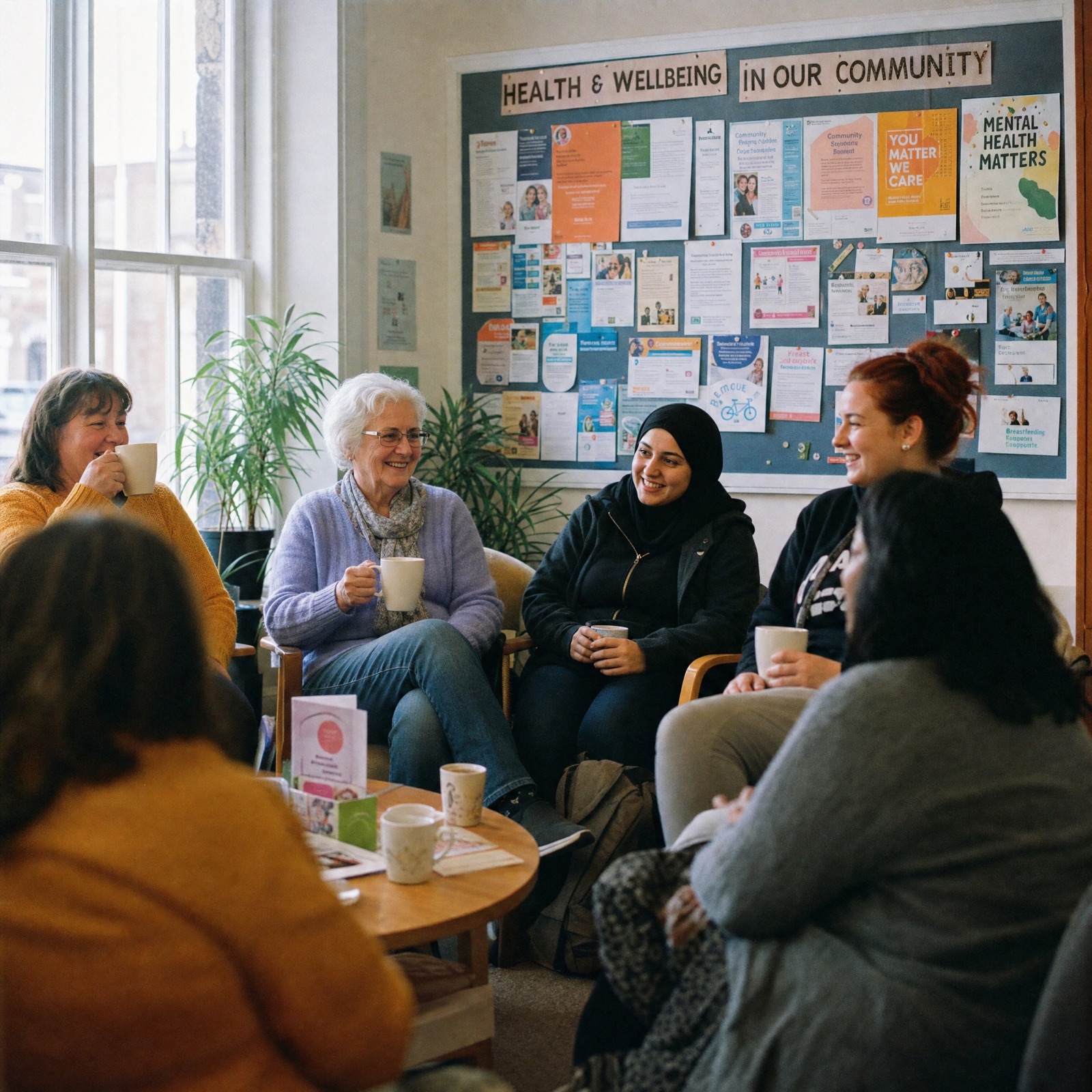
On a Thursday morning in Leith, the church hall fills slowly. Walking sticks lean against radiators, coats are piled on chairs, and the smell of fresh coffee drifts across the room. By half past ten, a dozen people are already mid-conversation — about television, about their grandchildren, about the new pharmacist on the Walk. To an outsider it might look like any community gathering. But for many of the people here, this hour or two is the steadiest point in their week.
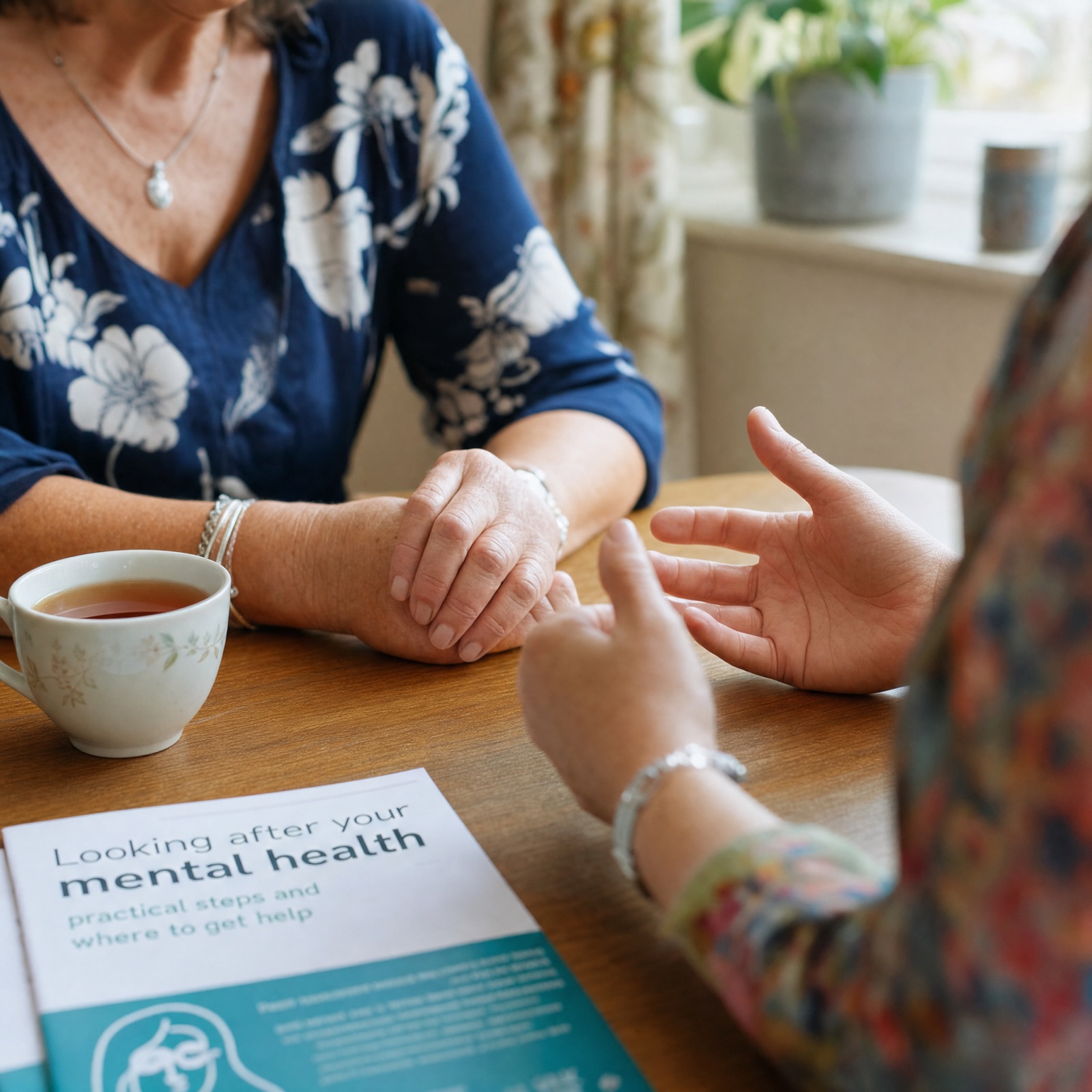
Vibrant Health Advocates runs weekly peer drop-ins at several locations across Edinburgh, with sessions in Leith, Gorgie, and Portobello serving residents who are managing conditions like COPD, type 2 diabetes, arthritis, and heart disease. The format is deliberately informal. There is no sign-in sheet, no agenda, and no expectation that anyone will talk about their health at all. What there is: a warm room, a friendly face at the door, and a small library of plain-language health guides that people can browse or take home. A trained volunteer is always present, but the conversations are led entirely by the people attending.
The peer element matters. Research consistently shows that older adults with long-term conditions benefit more from talking to someone who shares their experience than from professional advice alone. When a woman who has managed rheumatoid arthritis for twelve years explains to a newer attendee that heat pads work better than ice on inflamed joints, she speaks with the authority of lived experience. That kind of knowledge — practical, earned, freely offered — is exactly what the drop-in is designed to circulate. It travels person to person, week after week, building a body of shared understanding that no leaflet can replicate.
Edinburgh's tenement neighbourhoods are beautiful and historically rich, but they can also be isolating. Stairwells are private, gardens are shared but rarely used for socialising, and many older residents live one or two floors up without easy access to the street. For people managing fatigue, mobility difficulties, or chronic pain, even a short journey can become a calculation: is it worth it today? The drop-in is designed to make that calculation easier. Sessions are held in ground-floor, fully accessible venues, all within ten minutes' walk or a single bus journey from surrounding streets. The commitment is low. The return is high.
"I came the first time because my GP suggested it," says one regular attendee in his late seventies who moved to Leith after his wife passed away. "I didn't think it was for me. I thought it would be all talking about ailments." He laughs. "But we talk about everything. Last week we had a disagreement about the best way to poach an egg. I haven't laughed like that in months." He has not missed a Thursday session in over a year.
Sessions run every Thursday from 10am to 12pm in Leith, with additional drop-ins on Tuesday afternoons in Gorgie and Wednesday mornings in Portobello. No referral is needed, and there is no waiting list. Anyone aged 55 or over who is managing a long-term health condition — or who simply feels they would benefit from a bit of company and reliable health information — is welcome to come along. The first visit is always the hardest. Most people say they wish they had come sooner.